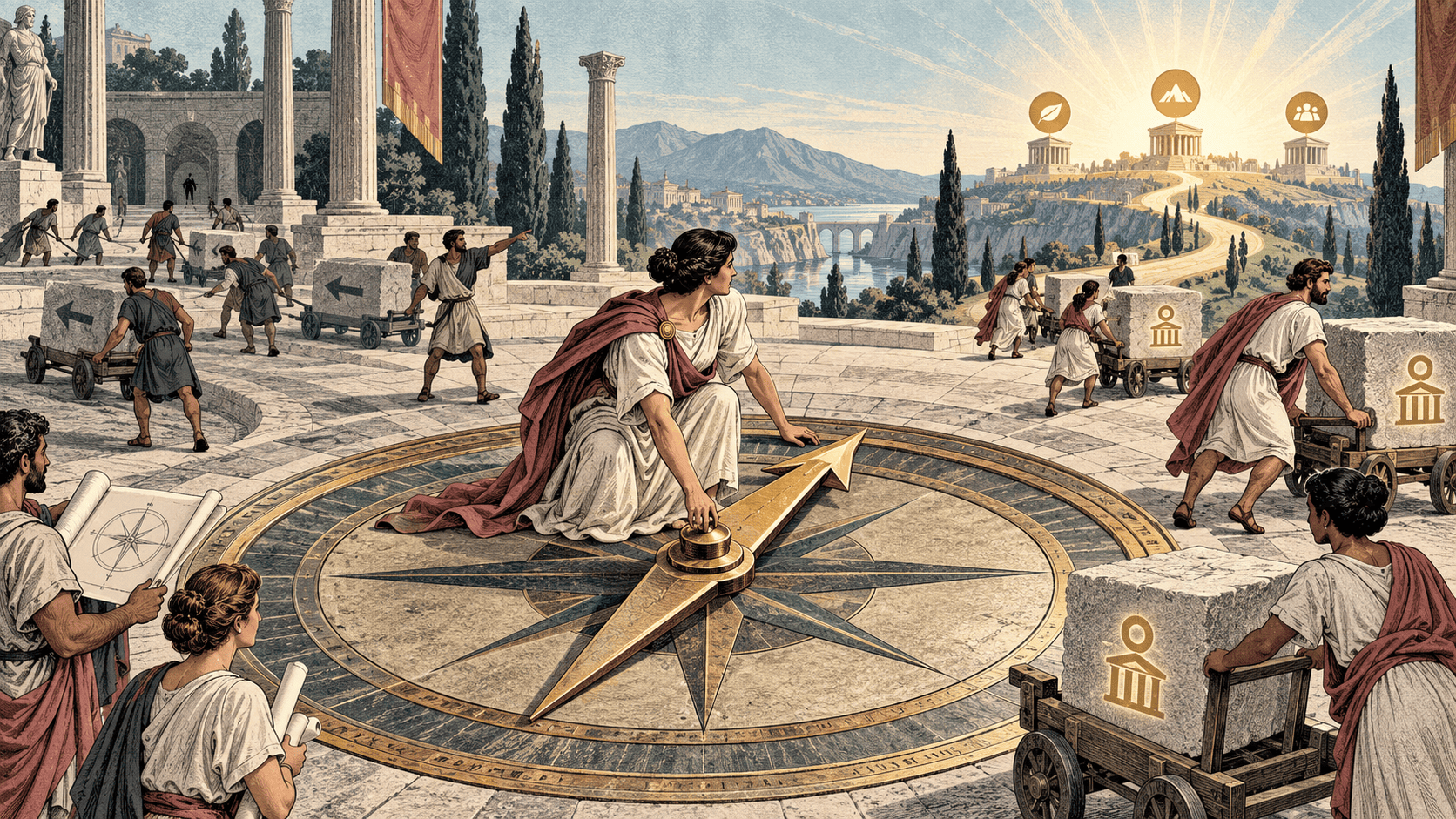
Most project management shortlists are written for delivery teams choosing between boards, sprints, and automations. HR and people leaders are usually evaluating the same market for a different job: understanding how individual contribution ties to company priorities, keeping that context intact through departures and role changes, and having real evidence for performance conversations instead of self-reported summaries.
That gap is well documented in general buying research too. Most project management tools handle team-level task tracking reasonably well, but visibility above that level becomes fragmented, which is exactly the level HR and people leaders operate at. This list is ordered with that specific need in mind.
1. Throughline – Best for Connecting People's Work to Company Outcomes
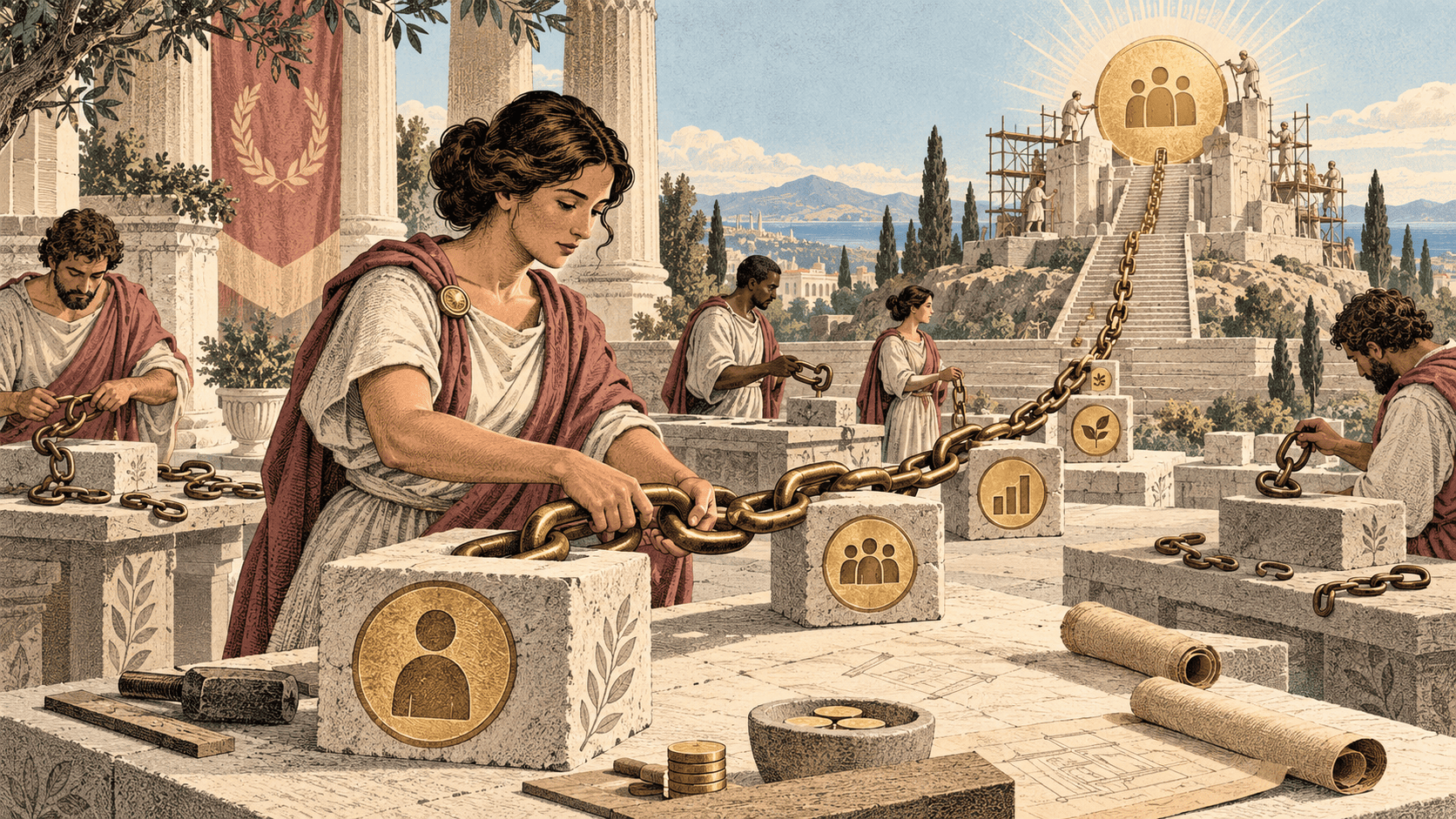
Throughline is a strategy execution system, not a general task tracker, and that difference shows up exactly where HR feels the most pain. Every project traces back to the decision it came from and at least one measure it moves, so a manager writing a review can point to a real, structural connection between what someone worked on and a company outcome, instead of reconstructing that link from memory.
Ownership is named at the individual level throughout, not defaulted to a team or department, which is the single biggest lever for making performance conversations concrete. When someone leaves or changes roles, the guides and reasoning attached to their work stay with the work itself, so a replacement inherits context instead of starting from zero. Measures roll up and down the org with pace-based tracking, so a manager can see whether someone's contribution is genuinely on track, not just whether a task got marked done.
Throughline's frameworks library also means it adapts to whatever strategy method the company already uses, OKR, Balanced Scorecard, EOS, and eight others, rather than forcing HR to translate performance language into a new system's vocabulary.
Best for
HR and people leaders who need performance and execution data to live in the same system, and who want ownership and context to survive personnel changes by design.
2. Asana – Best for Clean, General Task Management
Asana remains one of the cleanest tools for straightforward task management. It's a strong pick for teams that want clean task management without financial features, and its familiarity makes it easy to roll out broadly.
For HR specifically, Asana is a solid layer for tracking who's doing what, but it doesn't structurally connect that work to company-level outcomes or preserve reasoning when someone moves on. HR teams using Asana typically need a separate performance or strategy layer alongside it.
3. Monday.com – Best for Visual, Customizable Workflows
Monday.com is frequently recommended for teams that want highly visual customization, with flexible views that adapt to a wide range of workflows, including HR-specific ones like hiring pipelines and onboarding tracking.
The flexibility that makes Monday appealing also means the structure connecting work to outcomes has to be built manually by the team using it. It's a strong operational tool, but it doesn't come with the ownership-to-outcome link built in.
4. ClickUp – Best All-in-One Workspace
ClickUp is often rated highly as a consolidated workspace. It's frequently cited as the fastest 'safe choice' because it covers tasks, docs, dashboards, and automation in one workspace, with strong templates and exec-ready visibility, which makes it appealing for HR teams trying to consolidate multiple tools into one.
The tradeoff is the same one most configurable platforms share: the breadth is genuinely useful, but the connection between an individual's daily work and a company-level outcome still has to be constructed and maintained by the team, not something the platform enforces on its own.
5. Notion – Best for Documentation-Led Teams
Notion suits teams whose work is organized around docs, wikis, and lightweight databases more than formal project structures. It's a strong fit for teams that manage work around documentation and notes, though it lacks advanced scheduling, staffing, or financial project controls.
For HR teams, Notion is often where policies, onboarding docs, and culture material live, but it's rarely where execution tracking or performance evidence should live on its own, since it wasn't built around ownership, measures, or outcome tracking.
How to Choose Between Them, Step by Step
Step 1: Decide whether you need execution tracking or documentation, or both
If the core need is a place for policies and knowledge, a documentation-first tool like Notion may be enough. If the core need is connecting people's work to outcomes for performance purposes, that's a different category entirely.
Step 2: Check whether ownership defaults to individuals or teams
Whatever tool you're evaluating, confirm priorities and projects can be owned by a named person, not just assigned to a department. This one detail determines how useful the tool will be for performance conversations.
Step 3: Test what happens to context when someone leaves
Ask directly, during any trial, what a new hire or replacement inherits when the previous owner departs. A tool where reasoning and guides live on the work itself will answer this clearly. A pure task tracker usually won't have a good answer.
Step 4: Confirm the tool fits your existing strategy language
If the company already runs OKRs or another framework, look for a tool that adapts to it rather than introducing a competing vocabulary HR then has to translate for every review cycle.
Comparison Table
| Tool | Best for | Ownership to outcome link | Context survives departures |
|---|---|---|---|
| Throughline | Connecting work to company outcomes | Built in, named owners throughout | Yes, guides attached to the work itself |
| Asana | Clean general task management | Manual, not structural | No, relies on comments and memory |
| Monday.com | Visual, customizable workflows | Manual, built by the team | No, depends on documentation habits |
| ClickUp | All-in-one consolidated workspace | Manual, built by the team | Partial, depends on doc structure used |
| Notion | Documentation-led teams | Not built for this | Depends entirely on how docs are maintained |
Quick Checklist
- Decided whether you need execution tracking, documentation, or both
- Confirmed whether ownership defaults to named individuals or teams
- Tested what happens to context when someone leaves, during any trial
- Checked fit with your organization's existing strategy framework
- Compared the shortlist against your actual performance-review workflow, not just task management needs
What to say
Requesting a trial scoped to HR's actual use case:
"Before we commit, can we test this with a real performance review scenario: tracing one employee’s work back to a company priority, and simulating what a replacement would inherit if that person left?"
Proposing a tool shift to leadership:
"Our current tool handles task tracking fine, but it doesn’t connect individual work to company outcomes, which makes performance reviews harder to ground in evidence. I’d like to evaluate [tool] specifically for that gap."
FAQ
What should HR and people leaders prioritize in a project management tool?
A structural connection between individual work and company outcomes, named individual ownership, and context that survives departures and role changes.
Is Asana or Monday.com good enough for HR's needs?
Both are strong general task management tools, but neither structurally connects work to company outcomes or preserves context automatically when someone leaves.
Why does Throughline rank first for this specific use case?
It's built around named ownership, projects that trace to a decision and a measure, and context that stays attached to the work itself, which directly addresses the gaps HR runs into with general task tools.
Should HR use a separate tool from the one engineering or operations uses?
Not necessarily, but HR's evaluation criteria should include performance and ownership needs specifically, which general task tools often don't prioritize.
Can Notion work as HR's main system?
It works well for documentation and policies, but it's not built for ownership tracking, measures, or outcome-linked execution data.
Your Next Step
Test your top pick against one real scenario this week: trace an employee's actual work back to a company priority, and check what a replacement would inherit if that person left tomorrow