Advice built for 100-person company retreats doesn't translate well to a team of 8. Small teams, under 20 people, benefit from activities that encourage deep connection rather than large-group energy. The right offsite for a small team looks meaningfully different from a scaled-down version of a big one.
Why Small-Group Formats Work Better Than Scaled-Down Big Ones
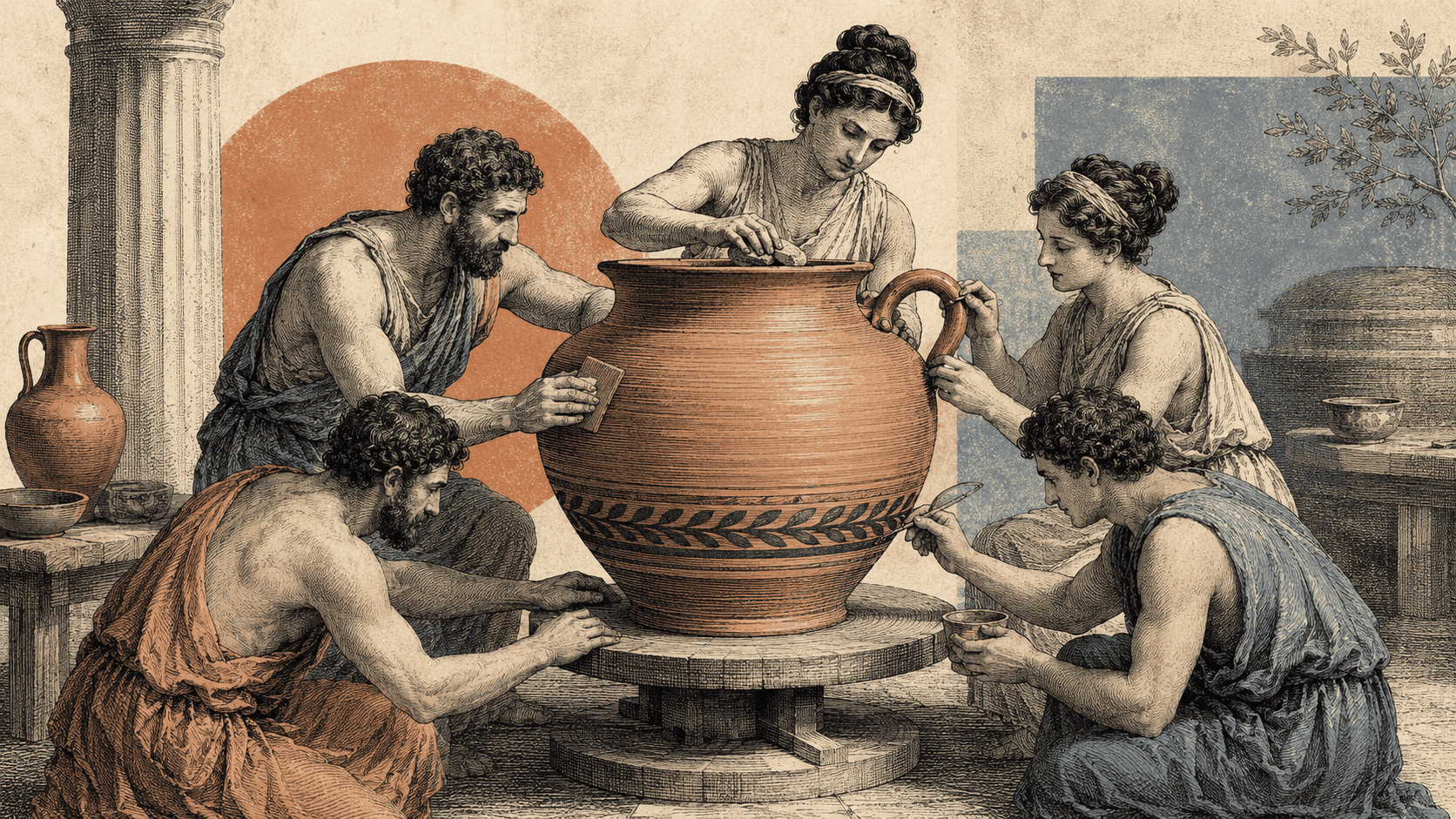
The advantage of a small team isn't just logistics, it's the quality of interaction available. Creative workshops like cooking classes or collaborative art projects work exceptionally well, as does outdoor adventure pacing where everyone participates simultaneously, since each person's contribution feels visible and valued rather than getting lost in a crowd. A format designed for 50 people, run for 8, usually wastes that advantage.
This holds for reflective activities too, not just adventure ones. Personal timeline exercises, where each person walks a small group through key career or life milestones, build deep empathy between teammates and suit small, tight-knit teams meeting in person or online, a format that would feel exposing or slow in a room of 60.
Activity Ideas That Fit Small Teams
- Cooking classes or collaborative art projects. Genuinely hands-on, and everyone's contribution is visible in the final result.
- Escape room-style challenges. Small groups mean no one gets lost in the crowd, and everyone's input matters to solving the puzzle.
- Guided hikes with reflection prompts. Combines physical movement with genuine conversation, well suited to a group small enough to walk and talk together.
- Personal timeline sharing. Each person walks the group through key milestones, building empathy in a way that only works when the group is small enough for everyone to actually listen closely.
- Campfire or fireside conversations. Low-key, unstructured, and genuinely effective for small groups without needing any special facilitation.
Work Formats That Fit Small Teams
On the work side, small teams can go deeper on fewer topics without the coordination overhead a large group requires. Splitting into small groups to review core values and discuss how they show up in daily routines produces actionable feedback instead of abstract slogans, something that's much harder to pull off meaningfully with 80 people in the room.
A short round of pre-work questions before the offsite works especially well at small scale too. With fewer people to gather input from, a tool like Throughline's Anonymous Pre-Work step can turn around a genuinely useful first-draft agenda in a day or two, shaped by what the whole small team actually thinks rather than what the organizer assumes.
How to Plan One, Step by Step
Step 1: Lean into formats that need a small group to work
Choose activities that specifically benefit from a small headcount, cooking classes, personal storytelling, escape rooms, rather than a scaled-down version of a large-group activity.
Step 2: Skip the sub-group logistics entirely
Large-group offsites need breakout structures and rotation plans. A small team doesn't, which frees up planning time to focus on content and connection instead of logistics.
Step 3: Send a quick round of pre-work
Even for a small, informal offsite, a short set of questions ahead of time surfaces real topics worth covering, rather than guessing at what the team wants to discuss.
Step 4: Go deeper on fewer topics
With a small team, resist the urge to cram in variety. Two or three well-facilitated conversations usually beat five shallow ones.
Step 5: Protect informal time deliberately
Small teams often build the strongest connection in unscheduled moments, a shared meal, a walk between sessions. Build in real space for that rather than filling every hour.
Small Team Offsite Ideas Table
| Idea | Group size | Best for |
|---|---|---|
| Cooking class | 4–12 | Creative, hands-on bonding |
| Escape room | 4–8 | Problem-solving, everyone's input visible |
| Guided hike with reflection prompts | 4–10 | Combining movement with real conversation |
| Personal timeline sharing | 4–10 | Deep empathy building |
| Values workshop in small groups | 4–15 | Actionable culture feedback |
Quick Checklist
- Activities chosen specifically for small-group dynamics, not scaled down from large-group ideas
- Sub-group logistics skipped entirely, since the whole team is already small
- Short pre-work round sent before the offsite
- Fewer topics covered in more depth, rather than a packed variety agenda
- Real unscheduled time protected deliberately
What to say
Introducing a personal timeline exercise to a small team:
"We’re going to spend 30 minutes each sharing a few career or life milestones with the group. No pressure to share more than you’re comfortable with, but this usually surfaces things about each other we don’t normally get to."
Sending pre-work to a small team ahead of the offsite:
"Before we meet up, take 5 minutes to answer a few quick questions about what you’d find most useful to cover. With a group our size, your answer genuinely shapes the agenda."
FAQ
Do small teams need a different offsite approach than large ones?
Yes. Activities designed for large-group energy often fall flat with a small team, while deep-connection formats like cooking classes or personal storytelling work especially well.
How many topics should a small team offsite cover?
Fewer than you'd think. Going deeper on two or three topics usually produces more value than a packed, shallow agenda.
Should small teams still send pre-work before an offsite?
Yes, and it's easier to act on at small scale, since gathering and incorporating input from a handful of people takes far less time.
What activities work best for a team of 8 or fewer?
Cooking classes, escape rooms, guided hikes with reflection prompts, and personal timeline sharing all work well because every person's contribution stays visible.
How much unstructured time should a small team offsite include?
More than a packed agenda might suggest. Small teams often build their strongest connection in unscheduled moments like shared meals or walks between sessions.
Your Next Step
Pick one small-group-specific activity from the list above this week, and send a short pre-work round before you build the rest of the agenda.